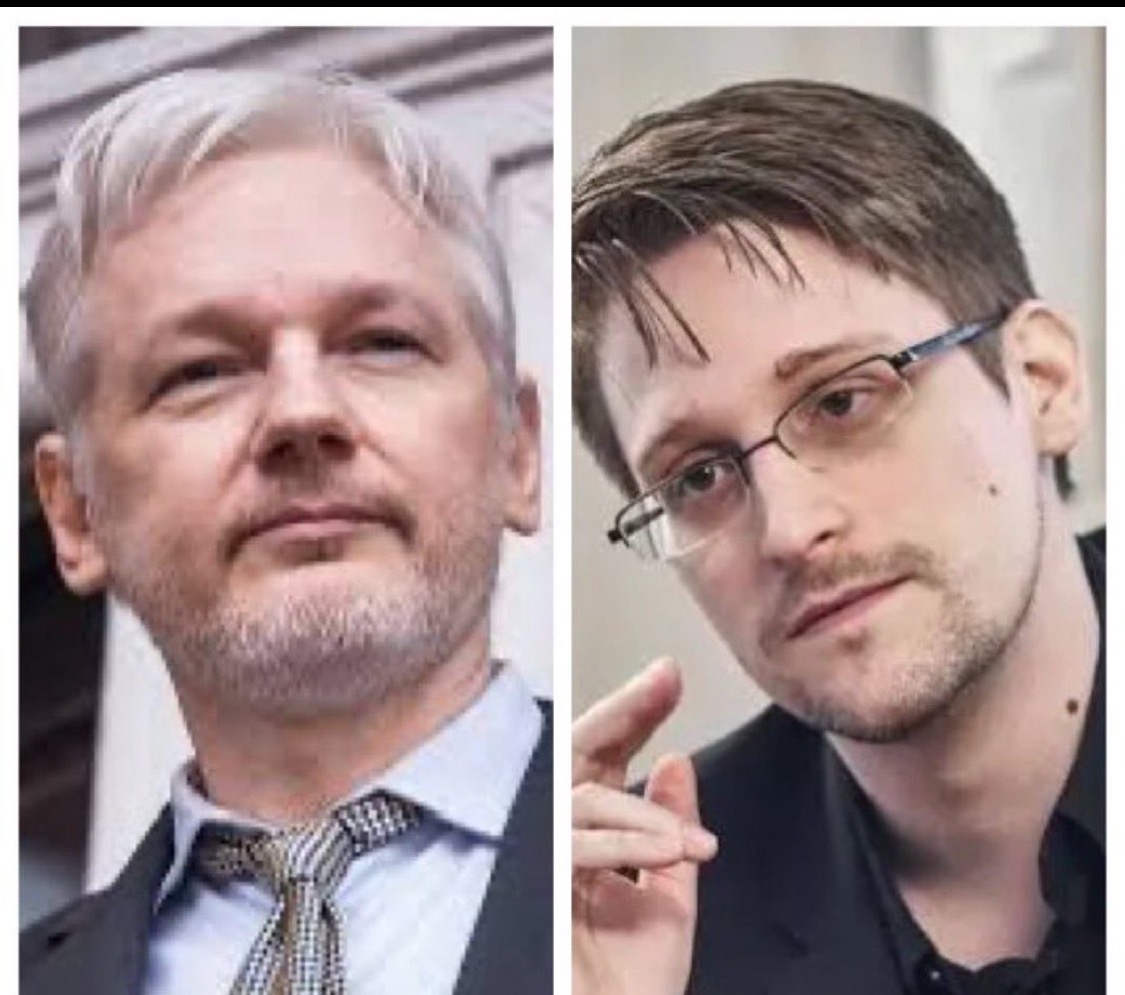
There is a rumor circulating tonight, October 28, that may be the biggest “October Surprise” in many electoral cycles.
Reports are circulating that President Trump is “strongly considering” pardoning Julian Assange and Edward Snowden, and possibly bringing them in to help expose corruption inside the intelligence community.
If that actually happens, it would trigger one of the biggest political and intelligence earthquakes Washington has seen in decades.
To revisit the Assange case, Julian Assange is an Australian programmer, editor, and publisher who founded WikiLeaks in 2006. He came to international attention in 2010 after WikiLeaks published a series of leaks from Chelsea Manning, a United States Army intelligence analyst: footage of a US airstrike in Baghdad showing war crimes committed by the US Army, US military logs from the Afghanistan and Iraq wars, and US diplomatic cables. Assange has won over two dozen awards for publishing and journalism.
He has remained outside US jurisdiction and from countries which have extradition treaties with the US.
In 2024, following a High Court ruling that granted Assange a full appeal to extradition, Assange and his lawyers negotiated a plea with US prosecutors. Assange pleaded guilty in Saipan, Northern Mariana Islands, to an Espionage Act charge of conspiring to obtain and disclose classified US national defense documents, in return for a sentence of time served. He has remained in Australia.
Edward Snowden is a former National Security Agency (NSA) intelligence contractor who leaked classified documents revealing the existence of global surveillance programs.
Its existence was not widely acknowledged by governments and the mainstream media until the global surveillance disclosures by Snowden triggered a debate about the right to privacy in the Digital Age. One such debate is the balance which governments must acknowledge between the pursuit of national security and counter-terrorism over a right to privacy.
This debate continues to cause consternation for the CIA and other espionage agencies across the world. And the inter-connection between these entities is deep and suspect. It gives the deep state the opportunity to spread half-truths in the quest for information, even if untrue.
If President Trump actually decided to disrupt the apparatus of collecting this type of information, the potential for years, decades, of coverups could expose some individuals with the corruption many people suspect to exist by the government. Certainly, pardons or even exonerations of Snowden and Assange would be a tremendous first start to destroy the deep state and all its enablers to attempt to destroy those who try to destroy it.
Remember, Kennedy tried it after the Bay of Pigs. And look what happened to him in November, 1963. And to others since then.

No comments:
Post a Comment