
When 60 Minutes debuted back on September 24, 1968, Mike Wallace and Harry Reasoner, who were highly respected seasoned journalists with impeccable credentials, were the first hosts. Don Hewitt was the creator and its first executive producer.
No one knew where their political leanings lay nor who they voted for. It was truly a modicum of journalist integrity.
In recent years, no one could make the same claim with a straight face and not see how biased the news magazine had become.
This became evident over the last few weeks, as Bari Weiss, Editor-In-Chief of CBS News since October, 2025, has moved CBS News to a more unbiased, centrist news organization, by not renewing contracts of those “journalists” who have allowed their own political views to filter into their reporting.
It finally erupted last week when Ms Weiss fired 60 Minutes correspondents Sharyn Alfonso and Cecilia Vega, along with executive producer Tanya Simon and other producers last week.
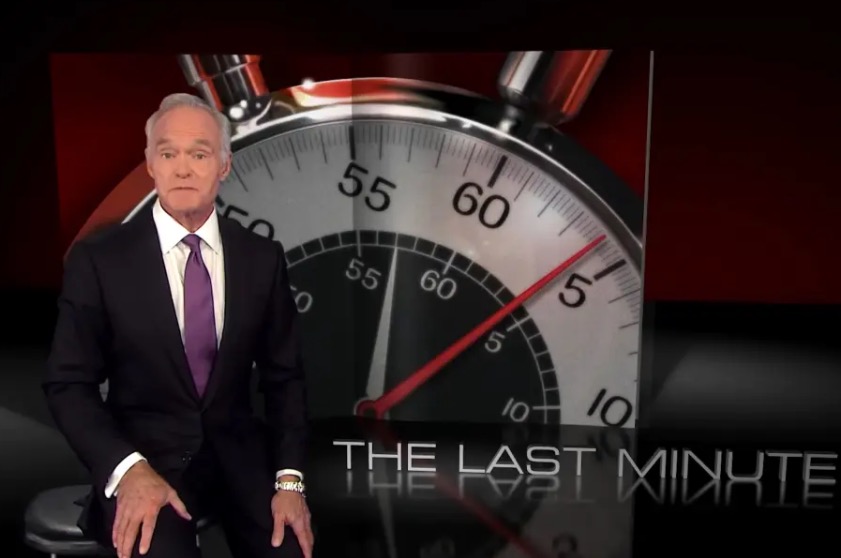
Subsequently, during a staff meeting with new executive producer Nick Bilton, Scott Pelley, on Monday during a meet-and-greet with staffers, called out the boss’s lack of TV experience, challenging his vision and telling him he would “never be welcomed here.”
“What did he accomplish?” one CBS source said of Pelley’s explosive attack. “He embarrassed the company and the leadership.”
Another witness agreed that Pelley’s tactics were “problematic,” noting that the correspondent should have met with Weiss or Bilton to at least hear them out.
“That grandstanding thing is insane. It’s third-grade, playground bullying stuff,” the source said. “This is not the way you conduct yourself.”
And yesterday, newly appointed 60 Minutes executive producer Nick Bilton blasted Pelley in informing him he was fired “for cause, effective immediately.”
“[Y]ou hijacked my first meeting with staff to disparage me, my qualifications, and my intentions with remarkable incivility and contempt,” Bilton wrote, referring to Monday’s heated face-off between the journo and his boss.
Had Pelley privately disagreed with Weiss and Bilton with the moves being made, rather than being so vocal in his apparent abusive tirade in the presence of others, the outcome may have been different. But he left no latitude by management for any other response.
This morning, CBS News editor-in-chief Bari Weiss addressed the firing of Scott Pelley during a staff meeting Wednesday morning, telling employees that the network had no choice but to part ways with the veteran correspondent following his public confrontation with management.
“The foundation [of trust and mutual respect] was broken,” Weiss said during the network’s daily 9AM editorial call.
“Despite our attempts to engage with Scott Pelley and to find a way back, unfortunately we weren’t able to do so, and so we had to part ways,” Weiss told staff.
CBS News president Tom Cibrowski echoed Weiss’s remarks, calling Pelley “an integral part of ‘60 Minutes,’ the ‘CBS Evening News’ and this entire news organization for decades.”
Pelley’s whiny response? “I have been in combat in Afghanistan. I have been in combat in Iraq. I have been in the war zone in Ukraine multiple times, risking my life and the happiness of my family because of my devotion to the broadcast.”
Hey Scott… you received a check for that work. Your self-pity-party alligator tears don’t work with people who make less than you, and who do much harder work, including your colleagues.
Pelley’s remarks also sparked widespread mockery on social media, where critics derided what they viewed as his self-importance and rejected comparisons between journalists and military personnel.
Perhaps, he will learn there are consequences when one takes on his boss in a public setting. It never would be tolerated in another private industry.
Journalists, generally, should learn that they are there to REPORT the story, rather than to be PART OF the story. A lesson Scott Pelley learned the hard way, when he thought he was more important than the company he worked for.

No comments:
Post a Comment